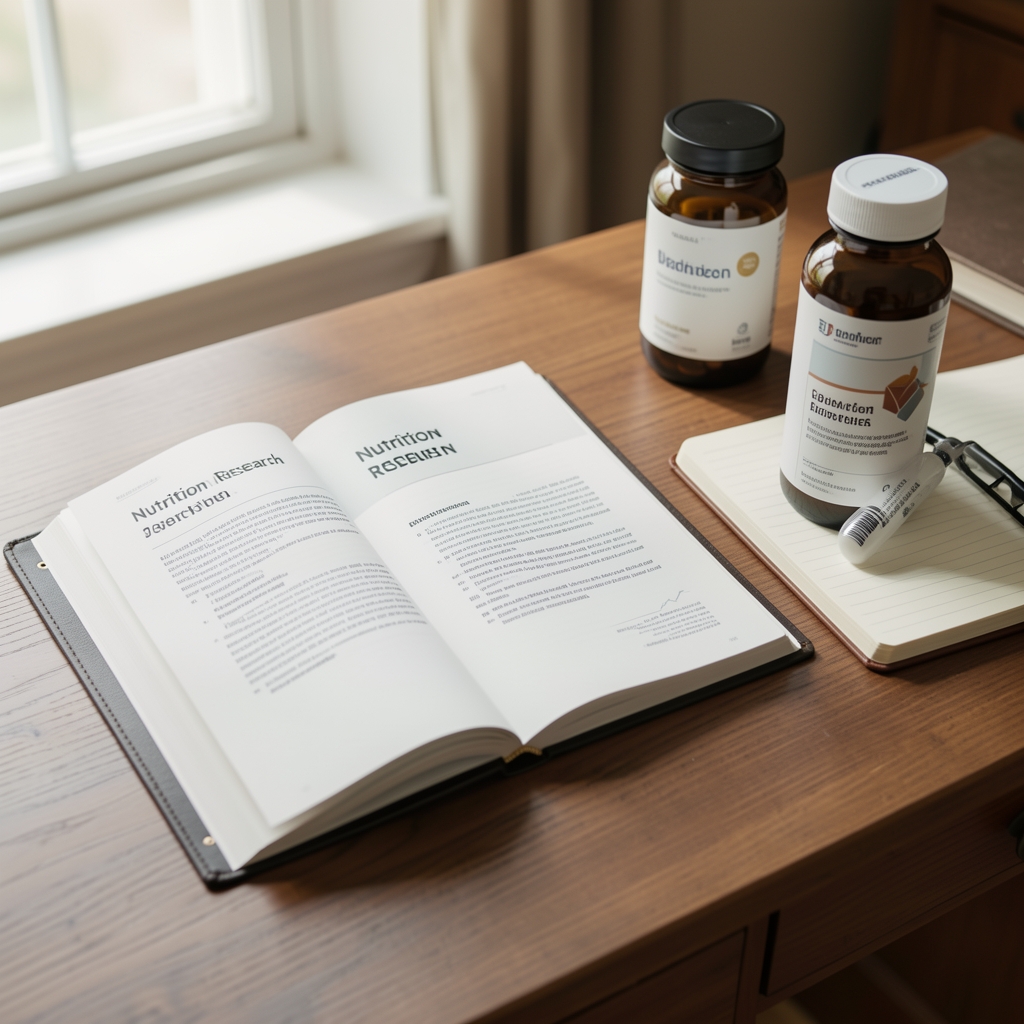
Jakarta Editorial Office, Source Review Process — 2026
Tarevon Letters operates under the following editorial principles: articles on men's supplement habits are reviewed by at least one second editor before publication, sources are cited where appropriate, corrections are noted publicly, and writers disclose any commercial relationships that could influence their selection of subject matter.
Tarevon Letters is an independent editorial publication covering men's dietary supplement habits, daily nutrition awareness, and active lifestyle practices. The publication is not affiliated with any commercial, governmental, or institutional body.
Writers identify topics through personal observation of active lifestyle patterns, reading of published nutritional research, or documented reader enquiries about men's supplement habits. Topics are proposed to the founding editor with a brief note on the angle and at least one primary source reference.
Content published by Tarevon Letters is selected based on published nutritional research and reviewed for editorial accuracy by a second editor before publication. Each nutritional claim within the draft must be accompanied by a verifiable source reference accessible to the reviewing editor.
Every article is passed to a second editor whose role is distinct from that of the writer. The second editor checks factual accuracy, source availability, vocabulary (with particular attention to claims about nutrient roles), and overall editorial consistency with the publication's voice and independence standards.
Before publication, the writer is asked to confirm whether they have any commercial relationship — current or recent — with any brand, product, or entity mentioned in the article. Disclosed relationships are noted at the bottom of the published piece.
Approved articles are published with full authorship, date, and — where relevant — source citations. The editorial archive is maintained in its original form; corrections are appended and dated, not silently applied over the original text.
Tarevon Letters applies a consistent vocabulary framework when describing the role of dietary supplements and nutrients in the context of men's daily routines. This framework exists to ensure that editorial language does not overstate, fabricate, or imply health outcomes that are not supported by the cited source.
"Contributes to daily nutritional balance; found in meat, seeds, legumes." The editorial focus remains on observational context, not claimed outcomes.
"Associated with muscle function awareness; found in nuts, greens, grains." Writers use "associated with" rather than causal language.
"Associated with daily energy rhythm; found in oily fish, eggs, fortified foods." Language mirrors published nutritional reference framing.
"Contribute to daily energy awareness and focus patterns." Framing draws on recognised nutritional reference values without extending beyond them.
"Contributes to nutritional variety; found in fish, flaxseed, walnuts." Whole food context is always referenced alongside supplement forms.
"Supports daily micronutrient variety alongside a balanced diet." Supplement role is always framed as complementary, not substitutive.
Errors happen in editorial work. What matters is how they are handled when identified. Tarevon Letters operates a straightforward corrections policy built on transparency rather than retroactive editing.
When a factual error is identified — whether by the original writer, the second editor, or a reader — the following process applies: the error is assessed against the original source; if confirmed, the correction is written, dated, and appended to the article in a clearly marked corrections section. The original passage is not silently removed if it is substantive.
Minor typographical or formatting errors are corrected without notation. Factual corrections are always noted. The date of the correction is always displayed.
Error identified and reported to the editorial team with source reference.
Original writer and second editor review the identified passage against cited source.
If error is confirmed, a correction is drafted, dated, and appended to the published article.
Reporting party is acknowledged where appropriate. Process is documented for internal reference.
Tarevon Letters is an independent editorial publication covering men's dietary supplement habits, daily nutrition awareness, and active lifestyle practices. The publication is not affiliated with any commercial, governmental, or institutional body.
This independence is not aspirational — it is structural. The publication does not carry advertising, does not have commercial partnership arrangements with supplement brands, and does not receive income from product referral arrangements. Writers are paid a flat editorial rate.
Readers who wish to verify this status are welcome to write to the editorial address. We respond to good-faith enquiries about our funding and independence within five business days.