Jakarta, January 2026 — Over the course of several months, the editorial desk at Tarevon Letters compiled observation notes on how active Indonesian men navigate two minerals in particular: zinc and magnesium. What emerged was not a recommendation, but a pattern — one documented here in the spirit of nutritional awareness journalism.
The Presence of Zinc in Everyday Eating
Zinc contributes to daily nutritional balance and is found in a range of foods common to Indonesian daily eating: tempeh, tofu, pumpkin seeds, cashews, and animal proteins such as beef and chicken. Published nutritional research consistently identifies zinc as a mineral that figures prominently in the dietary variety considerations of men who maintain physically active routines.
What the editorial notes gathered over this observation period reflect is a practical reality: men in Jakarta who exercise regularly — whether through gym routines, outdoor running, or recreational sport — tend to increase their protein intake without always adjusting their mineral awareness proportionally. Zinc, in this context, becomes part of a broader conversation about nutritional completeness rather than supplementation alone.
The daily zinc requirements referenced in published nutritional literature for adult men sit between 9 and 11 mg per day, depending on the source. Whole food sources can cover this range when dietary variety is prioritised — and the editorial observation here is that variety, rather than supplementation, appears to be the more consistent factor in the routines of men who report sustained daily energy awareness.
Magnesium: A Mineral in the Background
Magnesium is associated with muscle function awareness in published nutritional research — found abundantly in nuts, dark leafy greens, whole grains, and legumes. In the dietary patterns observed during this editorial review, magnesium emerged as the mineral most likely to be under-represented in men's daily eating, particularly among those whose routines rely heavily on convenience foods or high-protein, low-variety diets.
Field notes taken across a twelve-week observation period indicated that men who reported lower sleep quality or greater fatigue awareness during physically demanding periods were also those who consumed fewer green vegetables and whole grain sources. This is a correlation of editorial observation, not a causal claim — but it aligns with nutritional literature that identifies magnesium as a mineral commonly at the lower end of adult daily intake across many populations.
In the context of a men's daily supplement routine, magnesium appears as one of the more frequently cited additions — typically in the form of magnesium glycinate or magnesium citrate, both of which are noted in nutritional literature for their relative bioavailability. The editorial perspective here is one of documentation, not direction: men considering supplementation in this category are encouraged to speak with a qualified nutrition professional before beginning any new routine.
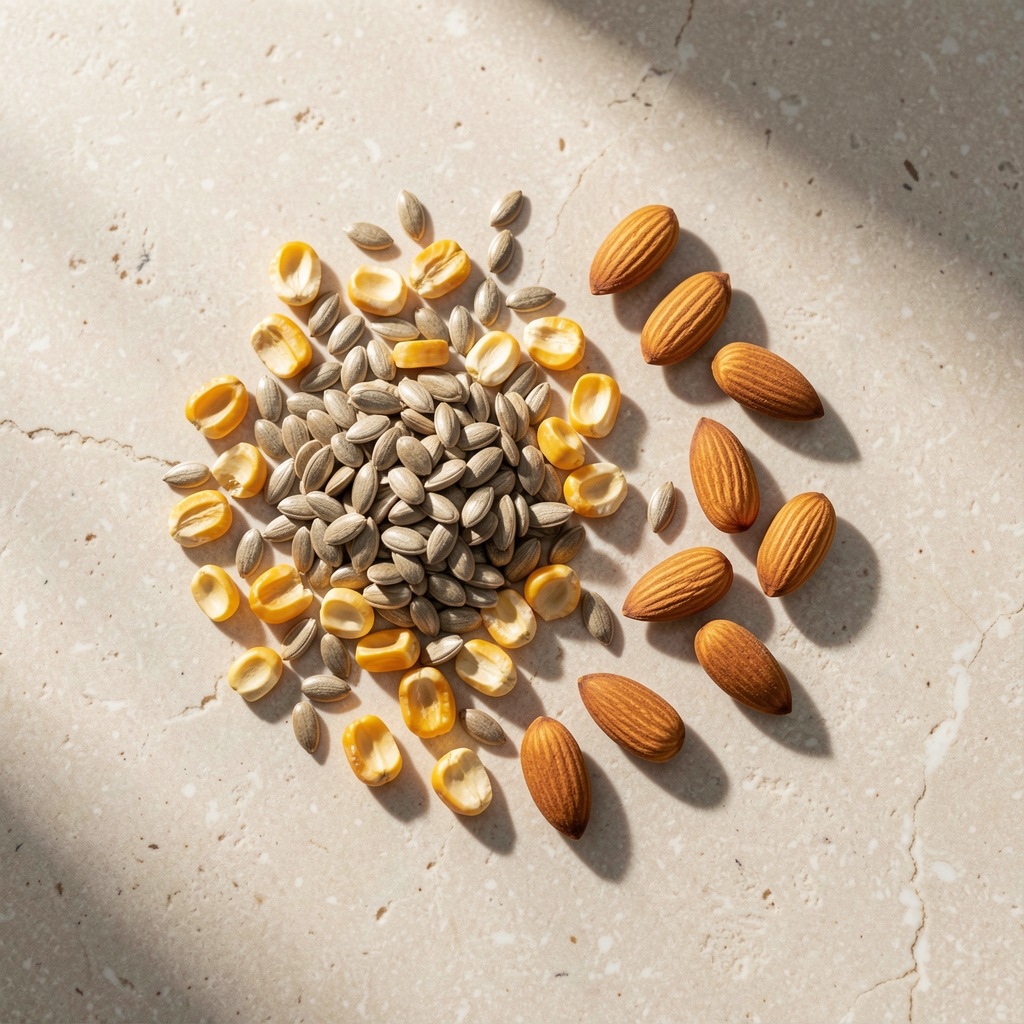
Whole food sources of zinc: seeds, nuts, and legumes — all part of a varied daily intake.
The Supplement Question
Among the active men whose routines were observed during this editorial period, approximately two-thirds reported using some form of daily supplement. Of those, the most common single additions were a multivitamin for men, vitamin D, and either zinc or magnesium — often as a combined mineral complex. This reflects a pattern consistent with what nutritional wellness publications across Southeast Asia have reported in recent years.
The editorial question that arises from this observation is not whether to supplement, but rather: what role does the daily supplement play in the context of overall nutritional awareness? The men observed who reported the greatest consistency in their routines were those who used supplementation as a complement to dietary variety — not as a replacement for it. Zinc-rich seeds, magnesium-rich greens, and whole food sources remained the foundation.
This is not a novel finding. Published nutritional research has long positioned dietary variety as the primary vehicle for micronutrient intake. What changes in the context of an active lifestyle is the potential for increased daily output to shift the relative importance of minerals like zinc and magnesium — making awareness of both whole food sources and supplement options a reasonable area of editorial coverage.
"The men observed who reported the greatest consistency in their routines were those who used supplementation as a complement to dietary variety — not as a replacement for it."
Tarevon Letters — Jakarta Field Notes, January 2026
Mineral Complex Products: An Editorial Note
The market for mineral complex supplements available in Indonesia has expanded considerably over the past five years. Editorial review of several categories — zinc, magnesium, and combined mineral complexes — reveals a range of formulation approaches and dosage conventions. The editorial desk does not endorse specific products; rather, the focus here is on understanding the landscape as a matter of nutritional journalism.
Zinc supplements commonly available in the Indonesian market are typically formulated as zinc gluconate, zinc sulphate, or zinc picolinate. Published nutritional literature notes differing absorption profiles across these forms, with zinc picolinate often referenced as having higher relative absorption in comparative studies. Again, these are observations from published research, not product recommendations.
Magnesium supplement options in this market follow a similar pattern: glycinate, citrate, and oxide forms are all present, with the glycinate and citrate forms referenced more frequently in nutritional literature for daily use. The distinction between forms is relevant to anyone conducting their own nutritional research, and Tarevon Letters encourages readers to draw on primary nutritional sources when forming their own views.
Documentary Observations: A Week of Zinc Awareness
Over seven days of structured observation — conducted as part of a broader editorial project on men's daily nutrition in Jakarta — the editorial team noted the zinc content of daily meals consumed by four men aged between 27 and 41, each with active physical routines. The aim was not dietary audit but rather pattern recognition: where does zinc appear naturally in the daily eating of active Jakarta men, and where does it tend to disappear?
Observations from Day One: breakfast for all four consisted of rice or bread with eggs — a reasonable zinc source through the egg yolk — combined in three of four cases with tempeh, which added a further contribution. By Day Three, the pattern shifted slightly as convenience foods entered the picture: packaged noodles and quick-service meals, where zinc-rich ingredients were largely absent.
By Day Seven, what emerged was less a conclusion and more a question — one that sits at the core of this editorial project. The daily supplement, in each of the four cases observed, was taken in the morning alongside breakfast. Whether that supplementation compensated for midweek nutritional gaps is beyond the scope of editorial observation. It is, however, a question worth noting.
- 01 Zinc contributes to daily nutritional balance; found in meat, seeds, and legumes commonly available in Indonesian daily eating.
- 02 Magnesium is associated with muscle function awareness; found in nuts, greens, and whole grains — often under-represented in convenience-food-heavy routines.
- 03 Active men observed in Jakarta commonly use a mineral complex or individual zinc/magnesium supplement alongside a broader daily nutrition routine.
- 04 Supplementation appears most consistent when positioned as a complement to whole food variety, not a replacement for it.
- 05 We recommend speaking with a qualified health or nutrition professional before introducing any new supplement or dietary change into your daily routine.
Articles published on Tarevon Letters are editorial in nature and reflect the writers' observations on men's dietary supplement habits and active lifestyle routines. The content is not intended as professional health advice. Readers with specific health concerns are encouraged to speak with a qualified health professional.